
Phytoplankton dosing is one of those topics where aquarists get one of two things wrong. Either they never dose at all because they assume their lighting handles everything, or they dose erratically — too much one week, nothing the next — and wonder why it does not seem to make a difference. Neither approach gets results. Consistent, calibrated dosing does.
The reason consistency matters so much is biological. Phytoplankton does not accumulate in your tank the way a pellet food does. Live cells are actively consumed — by copepods, filter feeders, and coral polyps — within hours of being added. What is left either gets exported by the skimmer or settles and decomposes. There is no reservoir building up between doses. Every time you skip a session, the food chain at the base of your tank goes without. The copepod reproduction rate drops. The filter feeders get less. The whole system runs a little leaner than it should. Frequency is what makes phytoplankton work — not volume.
How Much to Dose
The standard starting point used by most experienced reef aquarists is one millilitre per ten gallons of system volume, dosed two to three times per week. That number is a starting point, not a fixed rule. The right dose for your tank depends on what you are keeping, what is consuming the phyto, and how quickly your skimmer and refugium are pulling it back out.
A reef tank heavily stocked with soft corals, clams, feather dusters, and an active copepod population will process phytoplankton much faster than a fish-only system or a lightly stocked SPS tank. The most reliable way to calibrate your dose is to watch your water. If the tank stays crystal clear within a few hours of dosing, the biology is consuming the phyto efficiently and you may be underdosing. If water turns persistently hazy or green-tinted and does not clear within a day, you are overdosing and should cut back. Neither extreme is catastrophic, but neither is ideal — hazy water suggests nutrient loading, clear water within minutes of dosing suggests the dose is too small to have any lasting impact.
Start at half the recommended dose for the first two weeks. Watch how the tank responds. Then increase gradually — never jump to a large dose suddenly. Your filtration and biological consumption need time to adjust, and a sharp dose increase can spike nutrients before the system catches up.
When to Dose
Timing matters more than most aquarists realise. Evening dosing — thirty to sixty minutes after the lights begin to dim — is when most LPS and soft coral species extend their feeding tentacles for the night. Copepods also become more active at dusk and into the night. Dosing into this window maximises the proportion of phytoplankton that gets captured by biology rather than skimmed or filtered out before anything can eat it.
If you run a refugium, dose some of your phytoplankton directly into the refugium sump as well. Copepod populations in the refugium consume phyto intensively, and feeding them directly maintains the reproduction rate that drives nauplii export into your display tank. A refugium that is well-fed with phyto produces measurably more pod output than one that relies on whatever trickles through from the display.
One practical tip that makes a real difference: dose near a powerhead or return outlet rather than in a dead-flow area. Distributing phyto throughout the water column quickly gives every filter feeder an equal chance to intercept cells before they reach the skimmer. Phyto dropped into a calm corner near the glass often just drifts to the overflow before anything else encounters it.
Manual Dosing vs. Continuous Drip
There are two practical approaches to phytoplankton delivery, and they produce meaningfully different results. Manual dosing — adding a measured amount by hand two to three times per week — is the most common method and is perfectly effective when done consistently. The limitation is that it creates pulses: a surge of phyto cells, rapid consumption, then nothing until the next dose. Most tanks handle this fine, but it is not how phytoplankton exists in a natural reef environment.

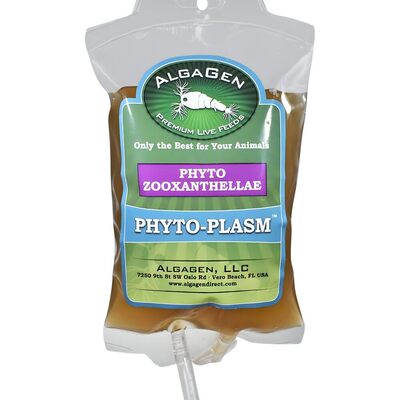
A continuous drip maintains a low, constant cell concentration in the water column that far more closely mirrors ocean conditions. This is what AlgaGen's Easy Feed Packaging is designed for. Phyto-Plasm™ Phyto Green in Easy Feed format can be configured to drip at a slow, consistent rate over days — tuned to your tank volume by adjusting the drip rate rather than measuring out manual doses. The result is a perpetual background concentration of live phytoplankton that filter feeders and copepods can access around the clock rather than during a brief post-dose window. For tanks with active copepod populations, clams, or heavy soft coral loading, the drip method consistently produces better results than the same weekly volume delivered in two or three large manual additions.
| Tank Type | Starting Dose | Frequency | Best Method | Watch For |
|---|---|---|---|---|
| Reef with soft corals and clams | 1 mL per 10 gal | 3x per week or drip | Continuous drip preferred | Improved polyp extension within 2 weeks |
| SPS-dominated reef | 0.5 mL per 10 gal | 2x per week | Manual — dose carefully | Nutrient creep — test NO3/PO4 weekly |
| Mixed reef with active pod population | 1 mL per 10 gal | 3–4x per week or drip | Drip into refugium + manual in display | Pod density on glass at night |
| New tank during cycling | 0.5 mL per 10 gal | 2x per week | Manual — small consistent doses | Copepod population building over 3–4 weeks |
| Fish-only or FOWLR system | 0.5 mL per 10 gal | 1–2x per week | Manual — lower priority | Supports any filter feeders and pod population present |
Choosing the Right Phytoplankton Product
Not all phytoplankton products serve the same purpose, and dosing the wrong strain for your tank's inhabitants limits how much benefit you actually see. Green phytoplankton species — like those in Phyto-Plasm™ Phyto Green — are the preferred food for harpacticoid copepods, rotifers, and many filter feeders. Brown phytoplankton species feed calanoid copepods, amphipods, clams, scallops, and planktivorous corals. A nine-strain blend covers the broadest possible range of consumers simultaneously.

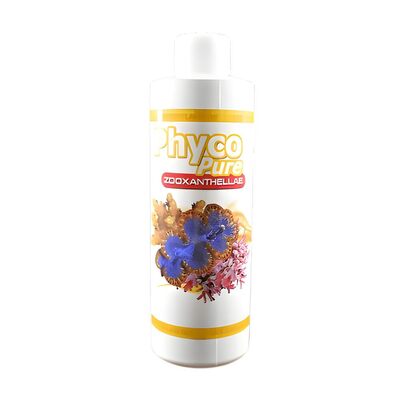
PhycoPure™ Reef Blend is the most diverse phytoplankton product in AlgaGen's range, containing nine strains including zooxanthellae. It is the natural choice for manual dosing in an established reef because that diversity means every filter feeder, copepod species, and coral type in the tank has access to at least some of what it naturally prefers. For aquarists who are dosing phytoplankton for the first time and want a single product that covers the broadest possible range of biological consumers, this is the right starting point. Add it two to three times per week at dusk, near an area of good flow, and give the tank four to six weeks of consistent dosing before evaluating results.
The practical question of how much and how often ultimately comes down to this: dose small, dose consistently, and let your tank's biology tell you when to adjust. A skimmer pulling out dark, dense material after dosing is a sign of good consumption. Water that stays green long after dosing suggests you have outpaced consumption and should cut back. The tank gives you the feedback — you just have to read it and respond rather than sticking rigidly to a fixed number regardless of what is actually happening in the water.
Frequently Asked Questions
How much phytoplankton should I add to my reef tank?
A standard starting point is one millilitre per ten gallons of system volume, dosed two to three times per week. Adjust based on your tank's response — persistent water cloudiness means you are overdosing, water clearing within minutes of dosing may mean you are underdosing. Always start at half dose and increase gradually.
When is the best time of day to dose phytoplankton?
Evening dosing — thirty to sixty minutes after lights begin to dim — is most effective. This is when coral polyps extend feeding tentacles and copepods become most active. Dosing near a powerhead or return outlet ensures even distribution throughout the water column before the skimmer can remove it.
Is a continuous phytoplankton drip better than manual dosing?
Yes, for most reef tanks. A continuous drip maintains a constant low-level cell concentration that mirrors how phytoplankton exists in the ocean, allowing filter feeders and copepods to feed around the clock. Manual dosing creates beneficial pulses but results in hours without phyto between sessions. AlgaGen's Easy Feed Packaging is designed specifically for drip delivery.
Can I overdose phytoplankton in a reef tank?
Yes. Overdosing causes persistently hazy or green-tinted water and can elevate nitrate and phosphate levels as uneaten cells decompose. If your water does not clear within a day of dosing, reduce the amount or frequency. Live phytoplankton is far safer than processed foods in this regard, but moderation still applies.
Which phytoplankton product is best for a mixed reef tank?
A multi-strain blend provides the broadest coverage for a mixed reef because different corals, copepods, and filter feeders preferentially consume different species and cell sizes. PhycoPure Reef Blend from AlgaGen contains nine strains including zooxanthellae and feeds the widest range of reef inhabitants from a single product.
Related reading:
Phytoplankton Dosing: Simple Reef Guide
Mastering Phytoplankton Dosing for Saltwater Tanks
Zooplankton vs Phytoplankton: Reef Food Explained

Recent post