Every aquarium runs on invisible infrastructure. The glass, the filter, the lights — those are the hardware. The beneficial bacteria colonising every porous surface in the tank are the software. Without them, the hardware does nothing useful. Ammonia accumulates, nitrite spikes, and fish die in water that looks perfectly clean to the naked eye. With them, the system processes waste faster than it accumulates, parameters stay stable between water changes, and the tank develops the kind of biological resilience that makes it genuinely easy to keep over time.
Setting up a beneficial bacterial colony correctly from the start — and knowing how to protect and support it over time — is the single most impactful thing an aquarist can do for long-term tank health. This is the practical guide to doing exactly that.
How Beneficial Bacteria Actually Work
There are two distinct bacterial groups doing the essential work inside your aquarium, and they operate in sequence rather than in parallel. The first group — primarily Nitrosomonas species — converts ammonia into nitrite. Ammonia is the immediate toxin: produced continuously by fish waste, uneaten food, and decaying organic matter, it is lethal to fish at even low concentrations. Nitrosomonas does not eliminate the problem, it transforms it. Nitrite is still harmful but less acutely so, and it becomes the input for the second bacterial group — primarily Nitrospira — which converts nitrite into nitrate. Nitrate is relatively benign at moderate levels and is manageable through regular water changes.
This two-step conversion is the nitrogen cycle. Both bacterial groups are obligate aerobes — they need oxygen and they need surfaces to colonise. They do not exist in large numbers in the water column. They live in biofilm on filter media, live rock, sand grains, and decorations. The more colonisable surface area your tank contains, the larger the bacterial colony it can sustain, and the greater its capacity to handle biological waste without spiking.
A third group — heterotrophic bacteria — handles the upstream work of decomposing larger organic matter into the dissolved compounds that nitrifying bacteria can process. These are often overlooked in basic cycling guides but are equally important for water clarity, organic waste management, and sandbed health. Copepods directly support this group by physically fragmenting organic matter as they graze, dramatically increasing the surface area available for bacterial colonisation and accelerating decomposition at every stage.
Setting Up: Cycling a New Tank Correctly
The nitrogen cycle in a new tank takes four to six weeks under normal conditions. The process cannot be meaningfully shortcut without either introducing pre-seeded biology or using a bacterial supplement — both legitimate strategies discussed below. What it can be is managed correctly to ensure the colony that establishes is dense, diverse, and robust enough to handle the fish load you are planning to add.
Start with the right filter media. Porous ceramic rings, bio-balls, and sponge media provide vastly more colonisable surface area per volume than smooth plastic or basic mechanical filtration. The bacteria that establish on porous ceramic media are more resilient and more numerous than those on smooth surfaces — a meaningful difference when the tank gets its first large waste load. Fill your filter with high-surface-area biological media before you start the cycle, not after.
Add an ammonia source to fuel bacterial growth. Bottled pure ammonia, a small piece of raw seafood, or a bacterial ammonia supplement all work. The bacteria need a food source to establish. A tank with no ammonia input grows very slowly because there is nothing driving bacterial reproduction. Dose ammonia to approximately two parts per million and test every two to three days. When ammonia begins falling and nitrite begins rising, the first bacterial group is establishing. When nitrite falls to zero and only nitrate remains, the cycle is complete.
Live rock for marine tanks is the most effective single cycling substrate available because it arrives already seeded with diverse microbial communities, copepods, and other organisms that immediately begin colonising the rest of the system. A tank cycled with live rock establishes faster, cycles more completely, and develops a more biologically diverse colony than a tank cycled with dry rock and bottled bacteria alone.
| Cycling Method | Typical Timeline | Biological Diversity | Best For |
|---|---|---|---|
| Live rock (marine) | 2–4 weeks | Excellent — pre-seeded microbial community | Reef and marine fish tanks |
| Seeded filter media from established tank | 1–2 weeks | Good — transfers established colony directly | Any tank type — fastest safe method |
| Dry rock plus bottled bacteria | 4–6 weeks | Moderate — limited to bottled species | Pest-free setups where hitchhikers are a concern |
| Ammonia dosing only (fishless) | 4–8 weeks | Good — allows slow natural colonisation | Patient aquarists; any tank type |
| Substrate or sand from established tank | 2–3 weeks | Very good — transfers heterotrophic and nitrifying bacteria | Freshwater and marine — effective and low cost |
Supporting the Bacterial Colony Long-Term
Establishing the colony is only half the equation. Keeping it dense, diverse, and functional over months and years requires consistent habits that most aquarists either do not know about or gradually stop doing as the tank matures and feels stable.
Filter media maintenance is the most critical ongoing practice. Never rinse filter sponges, ceramic rings, or bio-media under tap water. Tap water contains chlorine or chloramine that kills beneficial bacteria on contact. Always rinse filter media in a bucket of old tank water removed during a regular water change. Never replace all filter media at once — swapping half at a time while leaving the other half undisturbed preserves the established bacterial population through the transition.
Antibiotic treatments are the other major threat. Any antibiotic medication used to treat bacterial infections in fish does not distinguish between harmful pathogens and the nitrifying bacteria in your filter. After any antibiotic treatment, test ammonia and nitrite daily for at least two weeks and be prepared to run the tank as if it is newly cycled. The bacterial colony may need to be partially rebuilt from scratch depending on how long and how much medication was used.

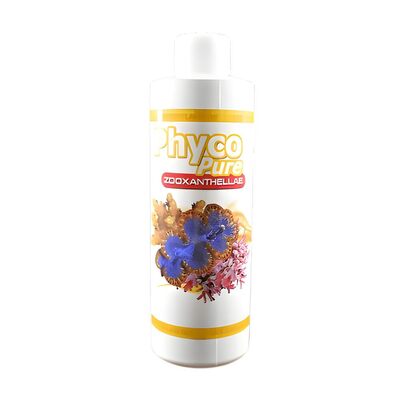
Feeding the biological food chain that supports bacterial activity is the proactive side of long-term bacterial health. Phytoplankton feeds copepods, copepods fragment organic matter into particles that heterotrophic bacteria process efficiently, and that processing supports the water chemistry stability that nitrifying bacteria require. PhycoPure™ Reef Blend dosed consistently two to three times per week maintains the base of this biological chain — fuelling copepod reproduction, absorbing excess dissolved nutrients before they feed nuisance algae, and keeping the microbial ecosystem active at every level. A tank that runs regular phyto dosing alongside an established copepod population consistently shows more stable water parameters and slower nutrient accumulation than one relying on mechanical filtration alone.
Copepods as Bacterial Support Infrastructure
The relationship between copepods and beneficial bacteria is one of the most practical and least discussed aspects of aquarium biology. Copepods do not replace bacteria. What they do is make bacterial processing dramatically more efficient by doing the physical work upstream that bacteria cannot do on their own.
Organic waste — uneaten food, fish waste, shed mucus, decomposing matter — arrives in the tank as complex macroscopic material. Bacteria colonise the surfaces of this material and decompose it, but the process is limited by surface area. A large piece of uneaten food has relatively little surface area for bacteria to work on compared to its volume. Copepods graze on and physically fragment this material, breaking it into smaller particles and dramatically increasing the surface area available for bacterial colonisation. The same volume of organic waste is processed measurably faster in a tank with a dense copepod population than in one without.

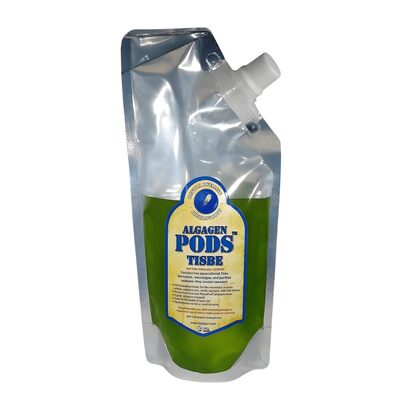
AlgaGenPods™ Tisbe establishes this organic processing layer directly. Seeded into the tank during or just after cycling, Tisbe biminensis colonises the substrate, live rock, and any refugium macroalgae and begins grazing immediately on diatom biofilm, bacterial films, and organic debris. The population reproduces and sustains itself with consistent phytoplankton feeding, creating a permanent biological preprocessing layer that works in direct partnership with the bacterial colony it is helping to support. Tanks seeded with Tisbe alongside proper bacterial cycling consistently develop more stable long-term parameters than those relying on mechanical filtration and bacteria alone.
The practical outcome of getting all of this right — correct cycling, protected filter media, consistent phytoplankton dosing, and a seeded copepod population — is a tank that requires progressively less intervention over time rather than more. Parameters stabilise. Algae pressure decreases. Water change frequency can often be reduced without compromising water quality. The biology is doing the work that equipment was never designed to do on its own.
Frequently Asked Questions
How long does it take to cycle a new aquarium?
Most aquariums complete the nitrogen cycle in four to six weeks under normal conditions. Using seeded filter media or substrate from an established tank can cut this to one to two weeks. The cycle is complete when ammonia and nitrite both read zero after adding an ammonia source, with only nitrate remaining.
What destroys beneficial bacteria in an aquarium?
The most common causes are rinsing filter media under chlorinated tap water, using antibiotic medications, replacing all filter media at once, and sudden large water changes. Sharp temperature drops or significant pH swings outside the range of seven to eight can also crash or significantly reduce the bacterial colony.
Do copepods help beneficial bacteria?
Yes, directly. Copepods fragment organic matter as they graze, increasing the surface area available for bacterial colonisation and accelerating decomposition. Tanks with established copepod populations process organic waste more efficiently than those without them, resulting in more stable water parameters and lower accumulation of ammonia precursors over time.
Can I add fish while the tank is cycling?
Adding a full fish load before the cycle is complete exposes fish to toxic ammonia and nitrite levels. A single very hardy fish is sometimes used as an ammonia source during cycling, but this is not recommended for sensitive or expensive species. Complete a fishless cycle first, confirm zero ammonia and nitrite, then add fish gradually.
How do I speed up cycling without bottled bacteria?
The fastest natural methods are transferring seeded filter media, substrate, or a handful of live rock from an established tank into the new one. These introduce an already-established bacterial colony directly rather than waiting for one to build from scratch. Warmer water temperature within the safe range for your intended livestock also accelerates bacterial reproduction and speeds the cycle.
Related reading:
The Role of Beneficial Bacteria in Aquariums
The Role of Microorganisms in a Balanced Aquarium
Copepods for New Tank: The Secret to a Smooth Start

Recent post