
Most phytoplankton products give you one thing: a single species, dense in the bottle, marketed as the complete answer to reef nutrition. The biology of a reef tank tells a different story. Soft corals, LPS polyps, SPS tissue, clams, feather dusters, copepods, rotifers — every one of these organisms has evolved to selectively consume different phytoplankton species based on cell size, surface chemistry, and fatty acid profile. Feed them a single strain and you are feeding part of the system. Feed them nine strains and you are feeding the whole thing.
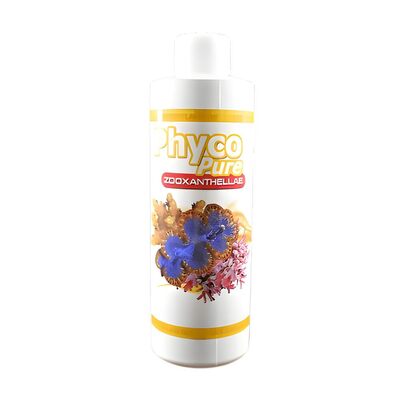
That is the core logic behind PhycoPure™ Reef Blend — the most diverse live phytoplankton product on the market for reef aquariums. Nine strains, including zooxanthellae, all cultured live and packed without fillers, thickeners, dyes, or gels. It is not a blend designed around what is easiest to grow at scale. It is a blend designed around what a reef tank actually needs.
Why Nine Strains Matter
Each phytoplankton species brings a distinct nutritional signature to the water column. Nannochloropsis is calorie-dense and rich in EPA — an omega-3 fatty acid critical for immune function and anti-inflammatory response in marine organisms. Tetraselmis is larger-celled, high in chlorophyll, and packed with essential amino acids and vitamins that smaller-celled species cannot provide in the same concentration. Isochrysis is the DHA source — the fatty acid most directly tied to neural development, visual system maturation, and reproductive success across virtually every marine animal group. These three are the foundation. The remaining strains in the Reef Blend fill specific nutritional gaps that none of the three cover alone.
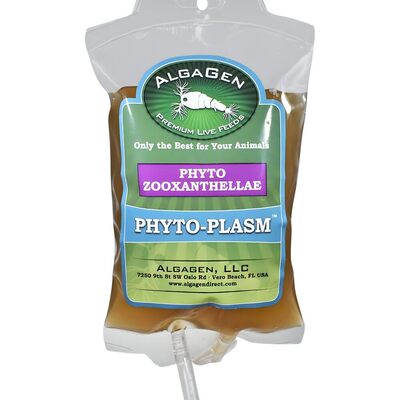
The inclusion of zooxanthellae is what truly separates Reef Blend from every other phytoplankton product available to reef hobbyists. Zooxanthellae are the symbiotic dinoflagellates that live inside coral tissue and power photosynthesis from within. Corals exposed to free-swimming zooxanthellae cells in the water column can reabsorb them through their tissue — a process that helps maintain and restore symbiont density during and after stress events. A reef tank dosed consistently with Reef Blend is not just being fed. It is being given a continuous opportunity to replenish the very biology that keeps its corals alive.

Who It Actually Feeds in Your Tank
The practical reach of Reef Blend across a mixed reef system is broader than most aquarists realise. Copepods like Tisbe and Apocyclops consume phytoplankton directly and use it as the primary fuel for reproduction — the reproduction rate that determines how many nauplii are exported into your display tank for fish and coral to hunt. Rotifers, if you are culturing them, eat phytoplankton and carry its nutritional profile forward to larvae and coral polyps as gut-loaded prey. Filter feeders — clams, feather dusters, sponges, tunicates — consume phytoplankton cells directly from the water column and have no other meaningful food source in most reef systems. And corals consume phytoplankton both directly through their polyp mouths and indirectly through their zooxanthellae symbionts performing photosynthesis inside their tissue.
That chain — phyto to copepods to fish and coral — is the entire trophic foundation of a reef tank. PhycoPure™ Reef Blend sits at the base of that chain and supports every link above it simultaneously. No other single product in an aquarist's toolkit reaches that far.
| Tank Inhabitant | How It Uses PhycoPure Reef Blend | Visible Benefit |
|---|---|---|
| Harpacticoid copepods (Tisbe) | Direct consumption — primary food source | Increased reproduction, denser nauplii export |
| Soft corals and zoanthids | Direct polyp uptake and zooxanthellae replenishment | Fuller polyp extension, stronger coloration |
| LPS corals | Symbiont maintenance and direct tissue absorption | Better color retention after stress events |
| SPS corals | Zooxanthellae reabsorption through tissue | Reduced bleaching risk, improved tissue density |
| Clams and feather dusters | Filter feeding directly from water column | Faster mantle growth, sustained feeding activity |
| Rotifers (if cultured) | Gut-loading before use as live feed | More nutritious rotifers delivered to larvae and corals |
How to Dose PhycoPure Reef Blend
The standard starting dose is one millilitre per ten gallons of system volume, added two to three times per week after lights begin to dim. Evening dosing aligns with the nightly feeding cycle of most coral species and the increased activity period of harpacticoid copepods, maximising biological uptake before the skimmer can remove suspended cells. Dose near an area of moderate flow — not directly into a powerhead — to distribute cells throughout the water column without immediately concentrating them at the skimmer intake.
For reef tanks running a heavy filter feeder load or an active copepod culture, dosing four to five times per week produces noticeably better results than the twice-weekly minimum. The biology in a dense reef system processes phytoplankton quickly. More frequent smaller doses maintain a more consistent cell presence than less frequent larger ones — exactly the same principle that makes continuous drip delivery the most effective method for advanced setups.
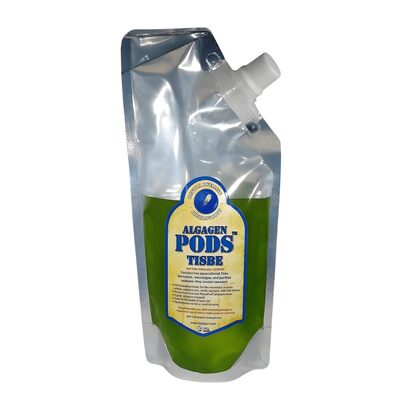
The copepod connection is worth emphasising specifically. Reef Blend dosed consistently into a tank seeded with AlgaGenPods™ Tisbe creates a self-reinforcing biological cycle: phytoplankton feeds the pods, the pods reproduce, nauplii export into the display tank, fish and corals feed on them, waste returns to the water column, and phytoplankton consumes the dissolved nutrients that waste produces. Each component supports every other component. Reef Blend is not just one input into this system — it is the input that makes the entire cycle turn.

What to watch for over the first four to six weeks of consistent Reef Blend dosing: improved polyp extension on soft and LPS corals, more active hunting behavior from planktivorous fish, increased pod visibility on the glass after lights-out, and faster mantle extension in clams during and after dosing. Water that clears within a few hours of dosing indicates the biology is consuming the phyto efficiently. Water that stays persistently green or hazy suggests the dose is outpacing consumption and should be reduced until the system catches up.
Nine strains. No fillers. Live on arrival. For a reef system that contains diverse coral, active filter feeders, and a live copepod population — which is most reef systems worth keeping — nothing else on the market gives you this much biological coverage from a single bottle.
Frequently Asked Questions
What makes PhycoPure Reef Blend different from other phytoplankton products?
PhycoPure Reef Blend contains nine live phytoplankton strains including zooxanthellae — the symbiotic algae that live inside coral tissue. Most phytoplankton products contain one to four strains. The diversity of Reef Blend means different cell sizes, fatty acid profiles, and nutritional compounds are available simultaneously, feeding a broader range of reef inhabitants from a single product.
Can PhycoPure Reef Blend help bleached corals recover?
Yes. The zooxanthellae strains in Reef Blend give corals the opportunity to reabsorb symbiotic algae through their tissue — a process that helps restore the photosynthetic partnership that bleaching disrupts. Consistent dosing during and after a bleaching event, alongside stable water parameters and appropriate lighting, supports faster tissue recovery and colour restoration.
How often should I dose PhycoPure Reef Blend?
Two to three times per week is a good starting point for most reef tanks. Tanks with heavy filter feeder loads, active copepod cultures, or multiple coral species benefit from four to five doses per week. Always dose in the evening near an area of good flow, and calibrate the amount based on how quickly the water clears after dosing.
Does PhycoPure Reef Blend contain any additives or preservatives?
No. PhycoPure Reef Blend contains live phytoplankton cells with no fillers, thickeners, dyes, or gels. AlgaGen produces all products to the same purity standards used in professional aquaculture and research settings. The product should be refrigerated and used within the indicated timeframe to maintain cell viability.
Will PhycoPure Reef Blend feed my copepods as well as my corals?
Yes — and this is one of the key benefits of using Reef Blend in a tank with an established copepod population. Harpacticoid copepods like Tisbe biminensis consume phytoplankton as their primary food source and respond directly to Reef Blend dosing with increased reproduction rates. More copepods mean more nauplii exported to feed fish and coral — creating a self-reinforcing biological loop that benefits every level of the food chain simultaneously.
Related reading:
Mastering Phytoplankton Dosing for Saltwater Tanks
Zooplankton vs Phytoplankton: Reef Food Explained
Top 5 Live Feeds for Thriving Reef Tank Ecosystems

Recent post