Reef keepers love “pods” for two reasons: they feed your tank and they clean your tank. But not all pods play the same role. Copepods and amphipods overlap in what they eat, yet they occupy different niches in the ecosystem. If you’re trying to reduce detritus, manage nuisance algae, and keep your sand and rockwork healthy, the best answer is rarely “either/or.” It’s knowing which one does what—and how to use both.
Quick definitions (so you can identify what you’re seeing)
- Copepods are usually tiny (often seen as “dust” or white specks on glass). Many species graze biofilm, microalgae, and fine detritus, and reproduce quickly.
- Amphipods are larger (often 3–10mm+), shrimp-like, and tend to hide in rubble and macroalgae. They shred larger bits of detritus and leftover food.
What do they actually clean?
Think of your tank’s waste in layers: fine film and dust, then chunks and leftovers. Copepods specialize in the finer layer; amphipods are better “shredders” for the bigger stuff.
| Cleanup Target | Copepods | Amphipods |
|---|---|---|
| Biofilm on rock/glass | Excellent | Occasional |
| Fine detritus / “dust” | Excellent | Good |
| Leftover frozen food particles | Good (small pieces) | Excellent (bigger pieces) |
| Macroalgae/rubble “mulm” | Good | Excellent |
| Nuisance algae prevention | Indirect support (reduces fuels) | Indirect support (reduces fuels) |
Where they live (and why that matters)
- Copepods: Many species live on surfaces (sand/rock/macroalgae) and some spend time in the water column. This makes them ideal for “continuous grazing” across the display.
- Amphipods: Prefer protected structure: rubble piles, thick macroalgae, porous media, and refugiums. They’re great at processing detritus where it accumulates—especially in low-flow zones.
The winner depends on your goal (Decision Chart)
| Your Main Goal | Best Pick | Why |
|---|---|---|
| Clean rock/glass biofilm + support coral feeding | Copepods | High reproduction + steady micrograzing + nauplii feed corals. |
| Reduce “chunks” of detritus and leftover food | Amphipods | Larger bodies + shredding behavior = faster processing of bigger waste. |
| Build a self-sustaining pod population | Both | Diversity fills more niches; refugium becomes a production zone. |
| Feed picky hunters (like mandarins) | Copepods (primary) | More consistent “micro prey” availability in rockwork. |
How to build a balanced “pod cleanup crew”
- Create safe habitat: Add rubble, porous media, and/or a refugium so pods can reproduce without being wiped out by fish predation.
- Feed the food web: Pods thrive when there’s a steady input of micro foods (especially phytoplankton). Starving pods means starving your cleanup crew.
- Seed at night: Add pods after lights out so they can settle into rockwork and hiding places.
- Protect the nursery: If you have heavy pod predators, keep a portion of your pod population in a refugium so the display is continually re-seeded.
Featured pod options

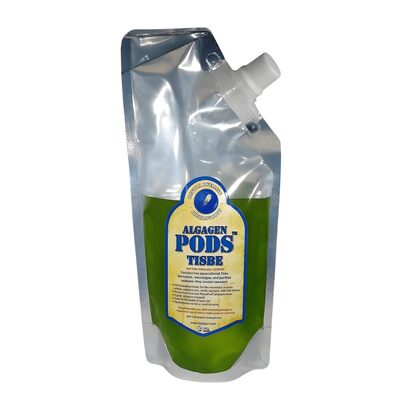
AlgaGenPods™ Tisbe — A benthic copepod that excels at surface grazing and building a long-term population.

AlgaGenPods™ Apocyclops — A hardy, active copepod that boosts biodiversity and supports open-water feeding.
Recent post