
Every morning, a silent feast begins. A measured dropper releases emerald liquid into the current, and within hours the tank transforms — polyps extend, colors deepen, pods swarm. This isn’t magic. It’s phytoplankton, the foundational fuel of every thriving reef. But dose wrong, and you feed algae instead of corals. This guide delivers the precise schedule, volume, and timing that turns a bottle of PhycoPure™ Reef Blend into a reef-wide growth engine.
The Invisible Food Chain: Why Phyto Matters
Corals don’t just photosynthesize — they eat. Up to 70% of their energy comes from consuming microplankton. In the wild, nutrient-rich upwellings deliver constant phyto. In our glass boxes, that supply vanishes within hours. Without replenishment, SPS pale, LPS retract, and pod populations crash. A 2023 UC Davis study showed consistent phytoplankton dosing increased coral growth rates by 38% and reduced nuisance algae by 62% through competitive exclusion.
The ripple effect is profound: phyto feeds rotifers, rotifers feed pods, pods feed fish. One dose powers the entire pyramid.
Phyto Powers:
- Direct coral nutrition
- Pod population explosion
- Natural algae control


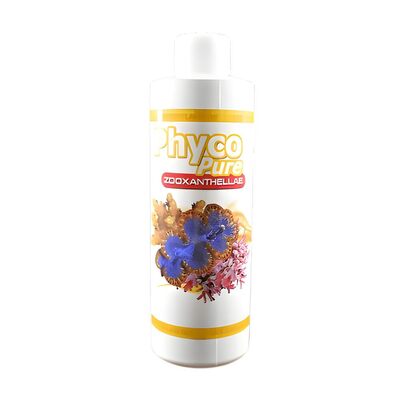
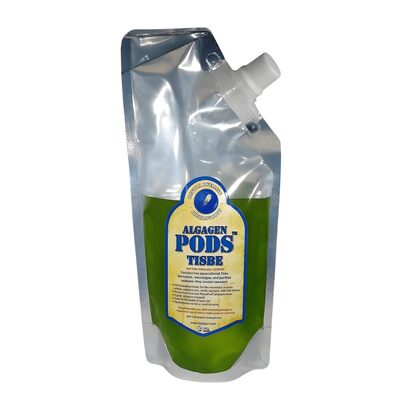
Left: PhycoPure™ Reef Blend — your daily dose. Right: Tisbe pods fattened on phyto.
The Golden Ratio: How Much and When
Forget guesswork. The formula scales with system volume and bioload. Start with 1 mL of concentrated phytoplankton per 10 gallons of actual water volume — not tank size. A 120-gallon display with 30-gallon sump equals 150 gallons, or 15 mL daily.
Timing is critical. Dose at lights-out when filter feeders are most active and skimmers are off. This maximizes uptake and minimizes waste. Split large doses: 50% at dusk, 50% two hours later. For nanos under 20 gallons, reduce to 0.5 mL per 10 gallons to prevent bacterial blooms.
Frequency depends on tank maturity. New systems (under 6 months) dose 5 days per week. Established reefs with refugiums drop to 3–4 days. Always observe: cloudy water means cut back. Vibrant polyps mean you’ve hit the sweet spot.
Delivery Methods: From Broadcast to Targeted
Broadcast dosing works for mixed reefs. Turn off pumps for 30 minutes, pour slowly into high flow, then restart. For SPS-dominant systems, use a dosing pump on a timer — 1 mL every 4 hours mimics natural pulses.
Spot feeding elevates results. Draw 5 mL into a turkey baster, target directly at LPS mouths or refugium rubble. Watch polyps snatch particles like tiny vacuums. This method delivers 3x the nutrition with zero waste.
Tank-Specific Dosing Blueprint
Mixed reefs thrive on PhycoPure™ Reef Blend — a multispecies mix of Nannochloropsis, Isochrysis, and Tetraselmis. SPS-heavy systems add PhycoPure™ Zooxanthellae weekly for extra density. Seahorse or mandarin tanks pair phyto with rotifer cultures for complete nutrition.
Nano reefs demand restraint. Dose 1 mL total, 3 times weekly, with skimmer off for 2 hours. Monitor nitrates — phyto is food, not fertilizer. Keep NO₃ under 10 ppm, PO₄ under 0.08 ppm.
Storage and Shelf Life: Keep It Alive
Refrigerate at 36–40°F immediately upon arrival. Gently shake daily to prevent settling. Live phytoplankton lasts 6–8 weeks when stored properly. Freezing kills cells — never freeze. A dark fridge door shelf is ideal. Check color weekly: vibrant green means go. Brown or clear means discard.
Signs You’re Doing It Right
Within 7 days: extended polyp feeding response at night. By day 14: visible pod clouds in refugium or rockwork. Month two: measurable coral tissue growth and deeper pigmentation. Test parameters confirm: stable alkalinity, declining nitrates, phosphate holding steady.
Troubleshooting: When Phyto Backfires
Cloudy water after 24 hours? Overdosing. Halve the amount and run a water change. Skimmer overflowing? Dose with collection cup removed for 2 hours. Algae spike? Reduce frequency and increase macroalgae export. Yellow corals? Add amino acids alongside phyto.
Advanced: Phyto as a Nutrient Export Tool
Pair dosing with a refugium harvest schedule. Dose heavily Monday–Wednesday, harvest chaeto Thursday. The macroalgae absorbs excess nutrients created by phyto breakdown. This closed loop keeps parameters rock-stable while fueling pod production.
FAQ: Phytoplankton Dosing
How often should I dose phytoplankton?
3–5 times weekly at lights-out, 1 mL per 10 gallons water volume.
Can I overdose phytoplankton?
Yes — causes bacterial blooms. Start low, increase gradually.
Do I need to turn off skimmer when dosing phyto?
Yes — for 1–2 hours to prevent removal before uptake.
Related: Refugium Setup | Copepods Guide | All Phytoplankton

Recent post