
A refugium without copepods is just a box of macroalgae. Useful, but incomplete. The real value of a refugium — the reason reef aquarists go to the trouble of building one — is what it can produce biologically: a protected, self-sustaining population of live food that exports into the display tank around the clock without any effort from you. To make that happen, you need a copepod species that is genuinely suited to refugium life. And that species is Tisbe.
Not all copepods build refugium populations equally. Some are too pelagic — they drift into the return pump before they can reproduce. Some require very specific conditions that a basic refugium setup does not provide. Tisbe biminensis is different. It is a benthic harpacticoid copepod that lives on surfaces — algae mats, rock rubble, substrate — and it colonises those surfaces so effectively that a well-seeded refugium becomes a self-replenishing pod nursery within four to six weeks. That is the outcome most aquarists are trying to achieve, and Tisbe is the most reliable way to get there.
Why Tisbe Thrives Where Other Pods Struggle
The behavioural biology of Tisbe biminensis is what makes it the right choice for a refugium specifically. In a display tank with active pod-eating fish — mandarins, wrasses, anthias, six-line blennies — any copepod that spends time swimming in open water gets eaten faster than it can reproduce. Tisbe avoids this by staying on surfaces. It crawls through Chaetomorpha, clings to rock rubble, and works through the substrate rather than drifting through the water column. In a refugium with no predation pressure, this behaviour means that Tisbe finds every piece of available surface area, establishes on it, and begins reproducing with almost nothing working against it.
Reproduction rate matters too. Tisbe females carry egg sacs and reproduce rapidly under favourable conditions — stable temperature, available food, low flow, and plenty of surface area. A refugium with a good macroalgae bed and a consistent phytoplankton food supply can sustain a Tisbe population at densities that would be impossible to maintain in a display tank under predation. Those high densities produce the nauplii export that feeds the display — and that export runs continuously, not just when you add a bottle of pods.

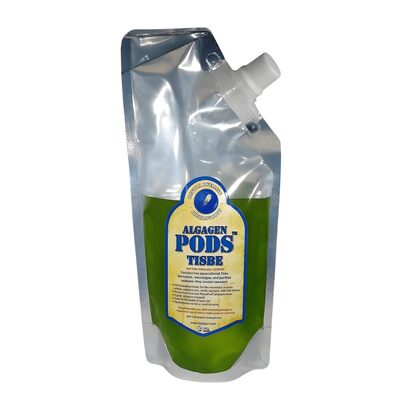
AlgaGenPods™ Tisbe is the standard choice for refugium seeding among serious reef aquarists for exactly these reasons. Each bottle contains live Tisbe biminensis adults and nauplii, cultured to AlgaGen's aquaculture standards with no fillers or additives. Add them to your refugium during the initial setup or at any point before introducing pod-eating fish to the display, and the population does the rest. Direct sixty percent of the dose into the refugium macroalgae bed — the remaining forty can go into the display rockwork at night with flow reduced. The refugium population is the one you are building for the long term. The display seeding is supplemental.
Building the Right Refugium Habitat
Tisbe colonises whatever surface area you give it. The more surface area, the larger the sustainable population. Chaetomorpha is the classic refugium macroalgae choice for this reason — its tangled, branching strands create a dense three-dimensional habitat that Tisbe can crawl through at every depth. A fist-sized clump of Chaeto provides more effective pod habitat than a large flat rock face because the surface area per volume is so much higher. Add a small rubble pile — broken coral pieces or porous ceramic media — for additional permanent hiding and egg-laying sites that remain stable even when you harvest algae.
Flow in the refugium should be low to moderate. Enough turnover to maintain oxygenation and prevent stagnant pockets, but with calm areas where nauplii can settle rather than being swept directly to the return pump. A reverse photoperiod — running refugium lights at night while the display is dark — stabilises pH swings and keeps the macroalgae growing without competing with the display lighting schedule. Tisbe is not light-sensitive in the same way some open-water species are, but the stable conditions a reverse cycle creates benefit the whole refugium biology.
Feeding the Population: The Step That Determines Long-Term Success
A refugium that is running well as a nutrient export system can paradoxically become a poor environment for copepod reproduction. When the macroalgae is pulling nutrients efficiently, organic matter in the refugium drops — which is exactly what the refugium is supposed to do for water quality, but it also removes the food base that Tisbe depends on for consistent reproduction. Aquarists who seed Tisbe once and then wonder why the population thins out over time are almost always hitting this issue without realising it.
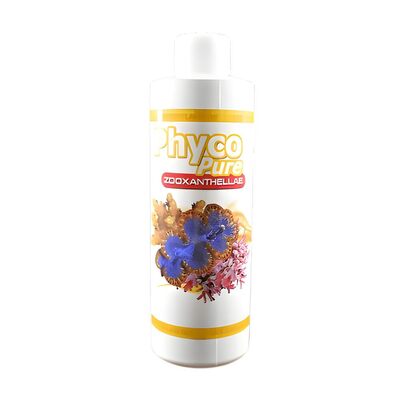
The solution is deliberate, consistent phytoplankton feeding. Dosing live phyto directly into the refugium two to three times per week maintains the base of the food chain at a level that sustains high reproduction rates regardless of how efficiently the macroalgae is stripping nutrients from the water. PhycoPure™ Reef Blend is the natural choice here — nine strains of live phytoplankton, including multiple species that Tisbe preferentially consumes, dosed directly into the refugium sump where the pods can access it immediately before the skimmer pulls it out. Small, consistent doses are far more effective than large infrequent additions for maintaining the steady low-level cell concentration that keeps a Tisbe culture reproducing at full capacity.

What a Productive Tisbe Refugium Delivers
The outputs of a well-maintained Tisbe refugium are tangible and visible. Nauplii drift continuously into the display tank through the return pump — most survive the trip through centrifugal pumps and arrive in the display as live prey. Fish that were previously accepting only prepared food begin hunting near the rockwork as nauplii density increases. Mandarin dragonets and scooter blennies — species that require live prey to survive long-term — maintain their condition and feeding weight without any additional live food purchases once the refugium population is established and producing at full capacity.
| Refugium Variable | Optimal Setup | Impact on Tisbe Population |
|---|---|---|
| Macroalgae type | Chaetomorpha — dense, branching | Maximum surface area for colonisation and egg-laying |
| Additional habitat | Rubble pile or porous ceramic media | Permanent stable substrate when algae is harvested |
| Flow rate | Low to moderate with calm pockets | Nauplii settle and hide rather than being swept to return |
| Lighting schedule | Reverse photoperiod — on at night | Stable pH, consistent algae growth for habitat |
| Phytoplankton dosing | 2–3x per week directly into refugium sump | Sustains reproduction rate even in low-nutrient systems |
| Re-seeding schedule | Every 2–3 months or after major disturbances | Refreshes genetics and reinforces density over time |
| Predation pressure | Zero in refugium — isolated from display fish | Population compounds freely; nauplii export maximised |
The sandbed and rockwork in the display tank also benefit directly from the Tisbe population that spills over from refugium export. Tisbe that survive into the display graze diatom films, bacterial biofilm, and detritus in the lower portions of the tank — the areas that mechanical filtration and powerheads cannot effectively clean. Aquarists who run a productive Tisbe refugium consistently report cleaner sandbeds, slower algae accumulation on glass, and better substrate clarity between water changes — all outcomes that trace back to the biology running in the box beneath the display.
The refugium is the infrastructure. Tisbe is the organism that makes it productive. Feed the pods, protect the habitat, and re-seed every few months to keep genetics and density strong. Do those three things and your refugium stops being a maintenance item and starts being one of the most useful biological tools in your entire reef system.
Frequently Asked Questions
Why are Tisbe copepods better for refugiums than other species?
Tisbe biminensis is a benthic harpacticoid copepod that lives on surfaces rather than swimming in open water. This behaviour means it colonises macroalgae, rock rubble, and substrate in the refugium and builds population density there rather than drifting into the return pump. Its rapid reproduction rate and preference for surface habitats make it the most reliable refugium pod species available.
How long does it take for Tisbe to establish in a refugium?
With good habitat — dense Chaetomorpha, a rubble pile, low flow, and consistent phytoplankton feeding — Tisbe populations typically become visible and active within two to three weeks. Full productive density, where nauplii export is noticeable in the display tank, usually develops within four to six weeks of the initial seeding.
How often should I re-seed Tisbe copepods in my refugium?
Re-seeding every two to three months maintains population genetics and reinforces density over time. After any major disturbance — a large water change, a medication event, a major algae harvest — re-seeding sooner is advisable. A well-fed, undisturbed refugium can sustain a Tisbe population indefinitely, but periodic top-ups keep production consistently high.
Do Tisbe copepods survive the return pump into the display tank?
Yes. Most copepods — including Tisbe nauplii and adults — survive passage through a standard centrifugal return pump. The nauplii that reach the display provide live food for fish and coral. You can also manually export pods by shaking a handful of refugium macroalgae directly into the display rockwork, which releases a concentrated burst of live pods immediately.
What should I feed Tisbe copepods in a refugium?
Live phytoplankton is the primary food source for Tisbe biminensis. Dose a multi-strain phytoplankton product directly into the refugium sump two to three times per week. In a nutrient-efficient refugium where macroalgae strips organics effectively, deliberate phyto feeding is what maintains reproduction rates at the level needed for strong nauplii export.
Related reading:
Copepods for Refugium: Setup Guide
Copepods for Reef Tank: Best Species
Discover Tisbe Pods and Their Benefits for Reef Tanks

Recent post