Prepared foods have come a long way. Modern pellets and frozen foods are genuinely nutritious, and most aquarium fish will survive on them without obvious problems. Survive is the key word. When you watch a reef fish that has access to live prey — hunting, chasing, striking — and compare it to one picking at pellets that drift past, you are watching two completely different states of animal health. Live food does something that no processed product can fully replicate: it triggers the full feeding response, delivers nutrition in its most bioavailable form, and engages the fish mentally in a way that has direct effects on stress levels, coloration, and long-term vitality.
The question is not whether live food is worth adding. It is which live foods make sense for your specific tank, your fish, and your feeding goals. The options available to aquarists today cover a wide range of organism types, particle sizes, and nutritional profiles. Understanding what each one actually delivers — and who it is actually for — makes the difference between a useful addition to your feeding regimen and money spent on something that does not fit your setup.
Copepods: The Foundational Live Food
Copepods are the live food that most closely mirrors what reef fish and coral actually encounter in the wild. On a natural reef, these tiny crustaceans are present in the water column at all times — nauplii and adults drifting past in the current, available for hunting around the clock. Establishing a live copepod population in a reef tank creates that same passive feeding stream, delivering live prey to fish and coral continuously without any active input from the aquarist.
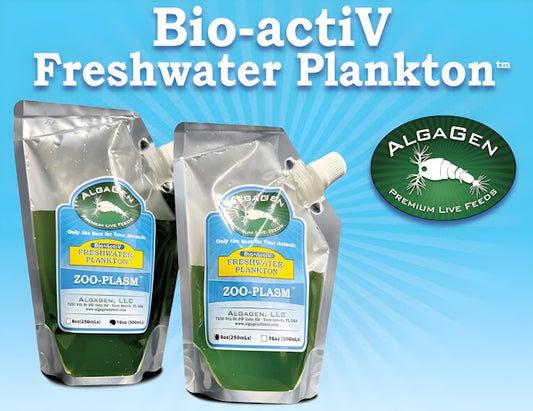
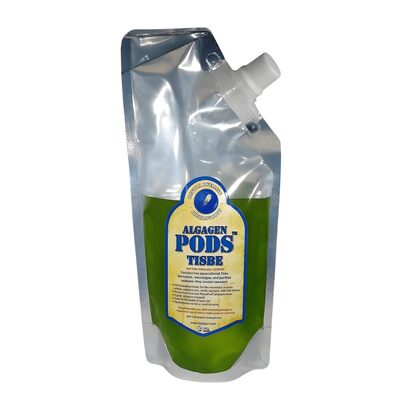
Tisbe biminensis is the workhorse species for reef tanks — benthic, surface-dwelling, and highly reproductive. Apocyclops panamensis moves between substrate and water column, making it more accessible to mid-water hunters like anthias and blennies. Running both species together gives full-spectrum coverage across different feeding zones. For freshwater tanks, Bio-actiV Freshwater Plankton™ delivers the freshwater-adapted equivalent — a live blend of copepods and ostracods that performs the same dual role of cleanup crew and live food in a freshwater system.
Rotifers: The Precision Live Food
Rotifers occupy a specific and irreplaceable niche in the live food hierarchy. They are microscopic — far smaller than copepod nauplii — which makes them the only appropriate live food for newly hatched fish larvae, very small juvenile fish, and the feeding polyps of coral. Their small particle size means they stay suspended in the water column long enough for filter feeders and small-mouthed species to intercept them naturally, without the need for target feeding or flow reduction.
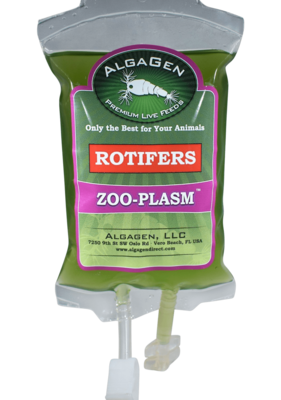
Zoo-Plasm™ Rotifers are packed fresh on the day of shipment with no fillers or additives, and come in AlgaGen's Easy Feed Packaging that allows a continuous low-level drip into the tank — the most effective delivery method for rotifers because it maintains a consistent presence in the water column rather than creating a brief spike followed by nothing. For anyone running a breeding setup, raising fry, or keeping coral-heavy systems where polyp extension and passive feeding matter, rotifers are not optional. They are the right tool for a particle size nothing else matches.
Phytoplankton: Live Food at the Base of the Chain
Phytoplankton is technically not a food for fish directly — most fish cannot consume cells this small. But it is the live food that makes all other live foods possible. Copepods eat phytoplankton. Rotifers eat phytoplankton. Clams, feather dusters, scallops, and many filter-feeding invertebrates consume phytoplankton directly. Without a consistent phytoplankton supply, the copepod population thins, the rotifer culture crashes, and the passive live food stream that healthy reef tanks depend on collapses from the bottom up.
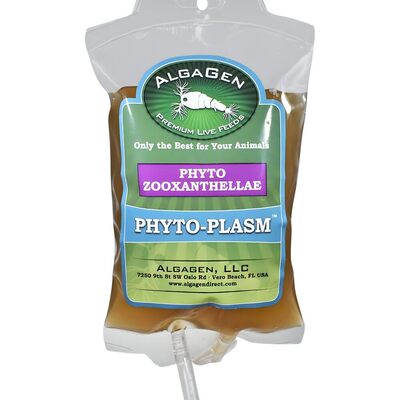
Species diversity in phytoplankton matters more than most aquarists realise. Different organisms in the tank preferentially consume different cell sizes and algae types. A single-strain phyto product feeds part of the system. A multi-strain blend feeds the whole chain. Phyto-Plasm™ Phyto Brown contains four species of brown microalgae — each selected for their distinct nutritional contributions including antioxidants, carotenoids, and essential fatty acids — and is specifically recommended for calanoid copepods, amphipods, clams, scallops, feather dusters, and planktivorous corals. It reaches the organisms that green phytoplankton alone does not effectively serve.

Choosing What Fits Your Tank
The best live food program is not the most complicated one — it is the one that matches what your tank actually contains. A reef tank with mandarin dragonets, wrasses, and LPS coral needs a different approach than a freshwater community tank or a breeding setup running fry. The table below maps common tank types to the live food categories that matter most for each.
| Tank Type | Priority Live Food | Secondary Live Food | Notes |
|---|---|---|---|
| Reef tank with mandarin / dragonet | Copepods (Tisbe + Apocyclops) | Phytoplankton to sustain pods | Refugium essential; seed before adding fish |
| Coral-heavy reef tank | Rotifers + phytoplankton | Copepod nauplii for polyp feeding | Drip delivery most effective for corals |
| Marine fish breeding / fry tank | Rotifers (first food for larvae) | Copepod nauplii as fry grow | Particle size is critical — rotifers first |
| Planktivore fish tank (anthias, blennies) | Copepods (Apocyclops) + rotifers | Brown phyto to sustain copepod population | Mid-water species need water column prey |
| Freshwater community tank | Live freshwater copepods + ostracods | Microalgae supplement for pods | Use freshwater-specific products only |
| Filter feeders (clams, feather dusters) | Brown phytoplankton | Mixed phyto blend for species diversity | Continuous drip more effective than dosing |
One practical point that applies across all of these categories: live food works best when it is delivered consistently in small amounts rather than in large infrequent doses. A continuous drip using AlgaGen's Easy Feed Packaging maintains a steady organism presence in the water column the way nature does — at constant, predictable levels that fish and filter feeders can intercept on their own schedule. A large weekly dump of rotifers or phytoplankton creates a spike, then nothing, and the organisms that missed the window get nothing until next week. Frequency and consistency matter far more than volume.
The other point worth making is that live foods work in layers, not in isolation. Phytoplankton feeds copepods. Copepods feed fish and coral. Rotifers feed fish larvae and coral polyps. Each layer supports the others, and a tank running all of them in proportion is genuinely more stable than one running just one. Start with whatever fits your current stock, add the next layer when the system is ready, and build the biological complexity from there. That is how a tank stops being maintained and starts running itself.
Frequently Asked Questions
What is the best live food for saltwater aquarium fish?
Copepods are the most versatile and biologically appropriate live food for saltwater fish. Tisbe biminensis works well for reef tanks and bottom-associated feeders, while Apocyclops panamensis suits mid-water planktivores like anthias and blennies. Rotifers complement copepods for smaller-mouthed species and coral polyp feeding.
Can I use live food in a freshwater aquarium?
Yes. Freshwater tanks benefit from live copepods and ostracods specifically adapted to freshwater conditions. Marine copepod species require saltwater and should not be used in freshwater setups. Bio-actiV Freshwater Plankton from AlgaGen Direct is specifically formulated for freshwater aquariums.
Why are rotifers recommended for fish fry?
Rotifers are microscopic — small enough for newly hatched larvae to consume before their mouths are large enough for copepod nauplii or other prey. They are nutritionally dense, stay suspended in the water column, and closely mimic the first foods fish larvae encounter in the wild. They are the standard first live food in marine fish breeding.
How often should I add phytoplankton to my reef tank?
Two to three times per week is a common starting point for direct dosing. A continuous drip using Easy Feed Packaging is more effective because it maintains a constant low-level presence in the water rather than creating spikes followed by gaps. Monitor water clarity and copepod population density to calibrate the right rate for your system.
What is the difference between green and brown phytoplankton?
Green phytoplankton species are favoured by harpacticoid copepods, rotifers, and many filter feeders. Brown phytoplankton species contain different pigments including carotenoids and fucoxanthin with antioxidant properties, and are specifically recommended for calanoid copepods, amphipods, clams, scallops, feather dusters, and planktivorous corals. Running both covers a wider range of tank inhabitants.
Related reading:
Top 5 Live Feeds for Thriving Reef Tank Ecosystems
Live Fish Food Aquarium
Understanding Live Fish Food
Recent post