Every aquarium has a moment where it either clicks or it does not. Water stays clear, fish are calm, ammonia and nitrite stay at zero, and the whole system feels like it is running on its own. When that happens, most aquarists credit their filter or their water change schedule. The real credit belongs to something they cannot see at all — billions of beneficial bacteria colonizing every surface in the tank, quietly processing waste faster than it can accumulate.
Understanding what those bacteria actually do, what threatens them, and what supports them is one of the most practical pieces of knowledge in the hobby. It does not require a biology degree. It just requires knowing the basic chain of events that keeps your tank alive.
The Nitrogen Cycle Is a Bacterial Process
Every time a fish produces waste, uneaten food decomposes, or organic matter breaks down, the result is ammonia. Ammonia is acutely toxic to fish even at low concentrations. Left unprocessed, it accumulates fast and kills. The only thing standing between your fish and ammonia poisoning is a specific group of bacteria — Nitrosomonas and related species — that convert ammonia into nitrite. Nitrite is still harmful, but less immediately so. A second group of bacteria, primarily Nitrobacter and Nitrospira, then convert nitrite into nitrate, which is far less toxic and manageable through regular water changes.
This two-step conversion is the nitrogen cycle. It is entirely dependent on living bacteria. No bacteria, no cycle. No cycle, no stable tank. This is why a new aquarium with no established colony is dangerous for fish — the system has not yet built the biological capacity to handle the waste load being produced inside it.
Cycling a new tank — the process of building that bacterial colony before adding a full fish load — typically takes four to six weeks. The bacteria colonize porous surfaces: filter media, live rock, sand, and decorations. The more surface area available, the larger the colony that can establish, and the greater the tank's capacity to handle biological waste without spiking.
Heterotrophic Bacteria and the Organic Processing Layer
Nitrifying bacteria get most of the attention, but they are only part of the bacterial picture. A separate group — heterotrophic bacteria — handle the upstream work of breaking down larger organic particles into the fine dissolved compounds that nitrifying bacteria can actually process. Uneaten food, fish waste, dead plant matter, shed mucus — none of this arrives as dissolved ammonia. It arrives as complex organic debris that needs to be decomposed first.
This is where the connection between bacteria and live microfauna becomes important. Copepods and other microcrustaceans physically break organic matter into smaller fragments as they graze. Those fragments expose more surface area to bacterial action, dramatically accelerating decomposition. A tank with a dense copepod population processes organic waste more efficiently than one relying on bacterial colonies alone — not because the copepods replace the bacteria, but because they prepare the substrate for bacterial processing at every stage.

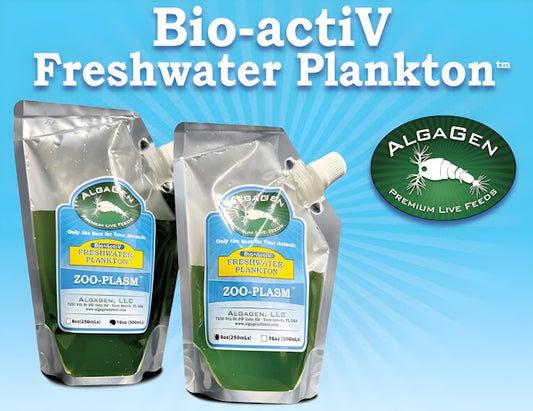
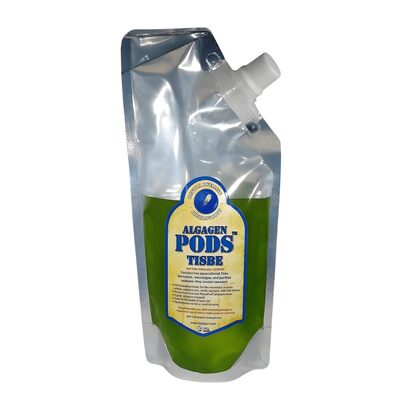
Zoo-Plasm™ PODS is a live mixed copepod culture containing three species in AlgaGen's Easy Feed Packaging — a format designed to deliver organisms at a consistent, steady rate that mirrors how zooplankton naturally exist in reef environments. The copepods it contains graze continuously on detritus, bacterial films, and organic debris throughout the tank. In doing so they directly support the heterotrophic bacterial layer by fragmenting and redistributing organic matter into particles that bacteria colonize and decompose faster. It is a biological partnership — the copepods do the physical work that makes the bacterial work possible.
| Organism | Role in the Tank | What Supports It | What Harms It |
|---|---|---|---|
| Nitrifying Bacteria | Convert ammonia → nitrite → nitrate | Porous media, stable pH, consistent temp | Antibiotics, chlorine, large water changes, cleaning filter with tap water |
| Heterotrophic Bacteria | Break down organic waste and debris | Organic matter, surface area, copepod activity | Overfeeding spikes, chemical treatments, stagnant flow |
| Copepods | Fragment detritus, graze biofilm, feed fish | Phytoplankton, biofilm, refugium habitat | Heavy predation, chemical treatments, poor water quality |
| Microalgae / Phytoplankton | Absorb dissolved nutrients, feed copepods | Light, consistent dosing, stable salinity | Overdosing, poor flow, temperature swings |
| Protozoa & Fungi | Further decompose organic particles | Biodiverse microbial community | Disrupted microfauna, sterile substrates |
What Threatens Beneficial Bacteria
Bacterial colonies are more fragile than most aquarists realise. A few specific practices wipe them out regularly, often without the aquarist connecting the cause to the subsequent ammonia spike. Rinsing filter media under tap water is one of the most common — tap water contains chlorine or chloramine specifically designed to kill bacteria, and running filter sponges under it destroys the colony living there. Always rinse filter media in a bucket of old tank water removed during a water change.
Antibiotic treatments are another significant threat. Medications used to treat fish disease often do not distinguish between harmful pathogens and the beneficial nitrifying bacteria colonizing your filter. Any time medication goes into the tank, the bacterial colony should be monitored closely afterward and potentially rebuilt. Never replace all filter media at once for the same reason — swap half at a time to preserve a seeded population on the media that stays.
Large sudden water changes, while sometimes necessary, dilute the dissolved organic compounds that heterotrophic bacteria rely on as a food source. In a heavily stocked tank, a series of massive water changes can temporarily crash the heterotrophic layer even while the nitrifying colony survives. Gradual, frequent smaller changes are always preferable to infrequent large ones.
Feeding the Biological Loop
Sustaining a healthy bacterial colony long term is not just about protecting it from threats — it is also about actively feeding the ecosystem that supports it. Phytoplankton plays a direct role here. Live microalgae introduced into the water column is consumed by copepods, which in turn process organic waste that bacteria decompose. The chain runs phytoplankton → copepods → bacterial processing → stable water chemistry. Remove any link and the whole loop slows.

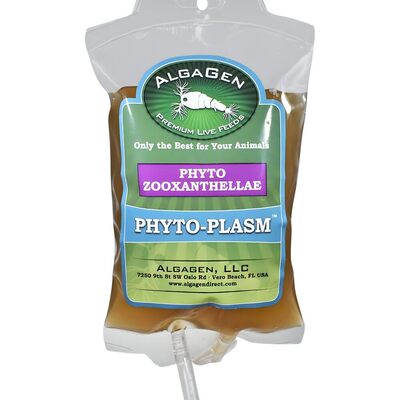
Phyto-Plasm™ Phyto Green is a live concentrated green microalgae blend containing two species specifically selected for their nutritional profile and natural antibiotic and antiviral properties. It feeds harpacticoid copepods, rotifers, and filter feeders directly while simultaneously competing with nuisance algae for dissolved nutrients. Dosed consistently through AlgaGen's Easy Feed Packaging — which allows a steady drip rather than periodic bulk additions — it maintains the base of the biological food chain at a constant level that mirrors how phytoplankton exists in natural reef water. That consistency is what keeps the copepod population robust, which in turn keeps the bacterial preprocessing layer active and effective.
The practical outcome of supporting this full biological chain is a tank that maintains stable parameters with less intervention — one that self-corrects minor fluctuations before they become visible problems. Ammonia spikes become smaller and shorter. Nitrate accumulates more slowly. Water clarity improves between water changes. None of that is magic. It is just what happens when you stop treating your filter as the only thing keeping your tank alive and start building the complete biological system it was always supposed to run on.
Frequently Asked Questions
How long does it take to establish beneficial bacteria in a new aquarium?
Most tanks complete the nitrogen cycle in four to six weeks under normal conditions. Warmer water, a higher surface area of porous filter media, and the presence of an ammonia source all accelerate the process. Adding seeded media or substrate from an established tank can cut the timeline significantly.
Can I add fish while the tank is still cycling?
Adding fish before the nitrogen cycle is complete exposes them to toxic ammonia and nitrite spikes. The safest approach is to complete a fishless cycle first, confirming zero ammonia and zero nitrite after adding an ammonia source, before introducing any livestock.
Do copepods really support beneficial bacteria?
Yes. Copepods physically fragment organic debris as they graze, increasing surface area and making organic matter more accessible to heterotrophic bacteria. Tanks with established copepod populations process waste more efficiently and tend to show more stable water parameters as a result.
What kills beneficial bacteria in an aquarium?
The most common causes are rinsing filter media under tap water containing chlorine or chloramine, antibiotic medications, large sudden water changes, and replacing all filter media at once. Bacterial colonies can also crash if the tank temperature drops sharply or if pH falls significantly outside the ideal range.
How does phytoplankton support biological filtration?
Phytoplankton feeds copepods, which graze on organic matter and support the preprocessing work that bacteria depend on. It also absorbs dissolved inorganic nutrients directly from the water column, reducing the nutrient load that reaches the bacterial filtration stage. Consistent phytoplankton dosing keeps this entire biological chain active and productive.
Related reading:
The Role of Beneficial Bacteria in Aquariums
The Role of Microorganisms in a Balanced Aquarium
Copepods for New Tank: The Secret to a Smooth Start
Recent post